Wayfaring and Wandering
Deer, Land, Training and Travel
High Nature Value Farming in Durness
I wrote this piece on High Nature Value farming in August 2013. It was originally written to go in The Northern Times but never went to print. I did it for the RSPB hence the emphasis on them. You can find further information on the High Nature Value Farming website. Personally, I feel that the HNV principle is sound, regardless of who endorses it, so I’ll post my article here.
Note: The HNV site contains a case study of Balnakeil farm. Both the site and this article share quotes from Andrew Elliot, the farm owner. The websites’ author is aware of this.
In this day and age, with environmental concerns around every corner, it is becoming more and more important for everybody – organisations, crofters and farmers, the public, and communities, to work together, to look after the world and wildlife around us.
Having spent the last 19 years living and working on a croft in the farming community of the Orkney Islands, I was intrigued by the concept of High Nature Value (HNV) farming, which the RSPB promote and support. I have since been investigating High Nature Value farming and how it is working in the county of Sutherland.

The basic premise of HNV is to operate a lower-intensity method of farming which is beneficial to wildlife, but without causing undue hassle or costs for the farmer or crofter and allowing them to maintain productive land. Something more akin to traditional farming methods of years gone past, and moving away from the intensive high input farming strategies of the 1970’s and 80’s. On a recent trip to Durness, I was able to see the difference that High Nature Value farming systems make to nationally scarce species such as the Corncrake and Great Yellow Bumblebee, whilst perhaps more importantly, retaining economically viable farming units.
Balnakeil Farm owned by Andrew Elliot, is one in an important network of farms and crofts following the High Nature Value principle in Durness. They are so successful that it is the last place on the UK mainland to which Corncrakes have returned consistently to breed every year – at the same time Balnakeil has maintained its excellent reputation for producing quality North Country Cheviots and pedigree Aberdeen Angus livestock.

However, despite this, it and many smaller crofts and farms are under threat from a lack of infrastructure and support packages. It would be a crying shame for communities, and for wildlife, if the vital work that HNV farmers and crofters do is under valued. When quizzed recently Andrew voiced his concerns on the matter -. “Investing in and supporting Less Favoured Areas would be the single most important thing the Scottish Government could do to support rural communities. At Balnakeil, there is a good balance between agricultural production and the environment. It’s a High Nature Value farm that definitely has a future, but it is essential to have that recognised in a more tangible form.”
The RSPB agrees that investing in and supporting less favoured areas – through the range of mechanisms now available to farmers and crofters in the reformed CAP package would help to make a difference, and acknowledge the importance of HNV systems. It has set out to make it easier for farmers and crofters to farm in a more conscientious manner. In Durness they have been able to help individual crofters prepare Rural Priorities applications – with a 100% success rate so far, and would like to see as many crofters and farmers take up similar options when the scheme re-opens. They have also invested in machinery to assist with habitat management – which includes a silage trailer, a muck spreader, and set of grass harrows – and they employ a highly skilled operator in James Mather, on a part time basis, to oversee the work there.

From what I have seen, it is evident that High Nature Value farming has a place in today’s world, and that of tomorrow. Farmers working with wildlife, as is being done at Balnakeil, is clearly a way forward for conservation, and it has been shown that it can work successfully without jeopardising a farms economic output. However, if this manner of farming is to continue and spread in active crofting communities across the Less Favoured Areas, then it is clear that better support must be available from the Scottish Government for farmers and crofters alike to use.
M Rowland, Aug 2013
Young Crofters 20:20 Gathering 2015 (Pt. 3) and Further Progress
Day 3: Our final day arrived and we headed over to Glencanisp, stag spotting as we went! We arrived at Glencanisp Lodge as the sun came out, couldn’t have asked for better, more inspiring weather for our last day!
This final day saw us split up into groups one last time to discuss the action points we would like to see carried forward by: the Scottish Crofting Federation, Young Crofters, Crofting Elders and by Scottish Government. When got back into the marquee and compared our all our notes there were main themes which were picked up by every single group. These points were:
- Broadband and mobile connectivity
- Jobs
- Access to land
- Cash flow
- Support
It was decided that after positive energy created over the three days that we would attempt to form a group, specifically for young crofters. We would become more political and begin to lobby government and put the pressure on to make the changes we wanted to see regarding the above points. We would begin to form a network of likeminded individuals and work to bring crofting into the foreground and up to date.
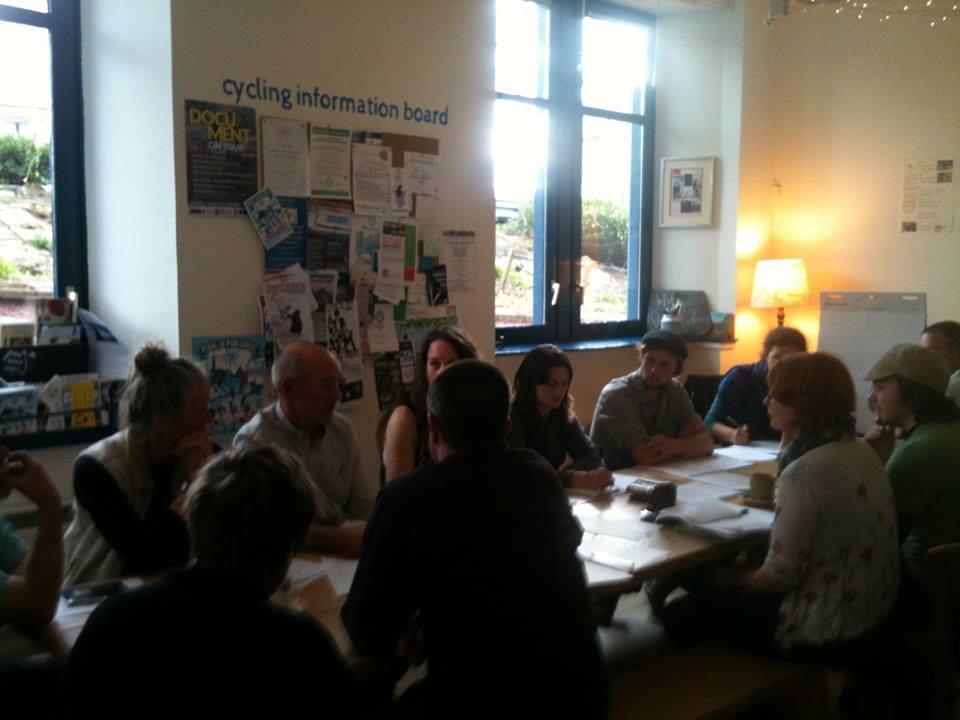
After the conference closed a group of seven of us decided to take the scenic route home via Stac Pollaidh. It was a good chance to talk over what we had experienced over the past three days, and the dram at the top didn’t go amiss either…


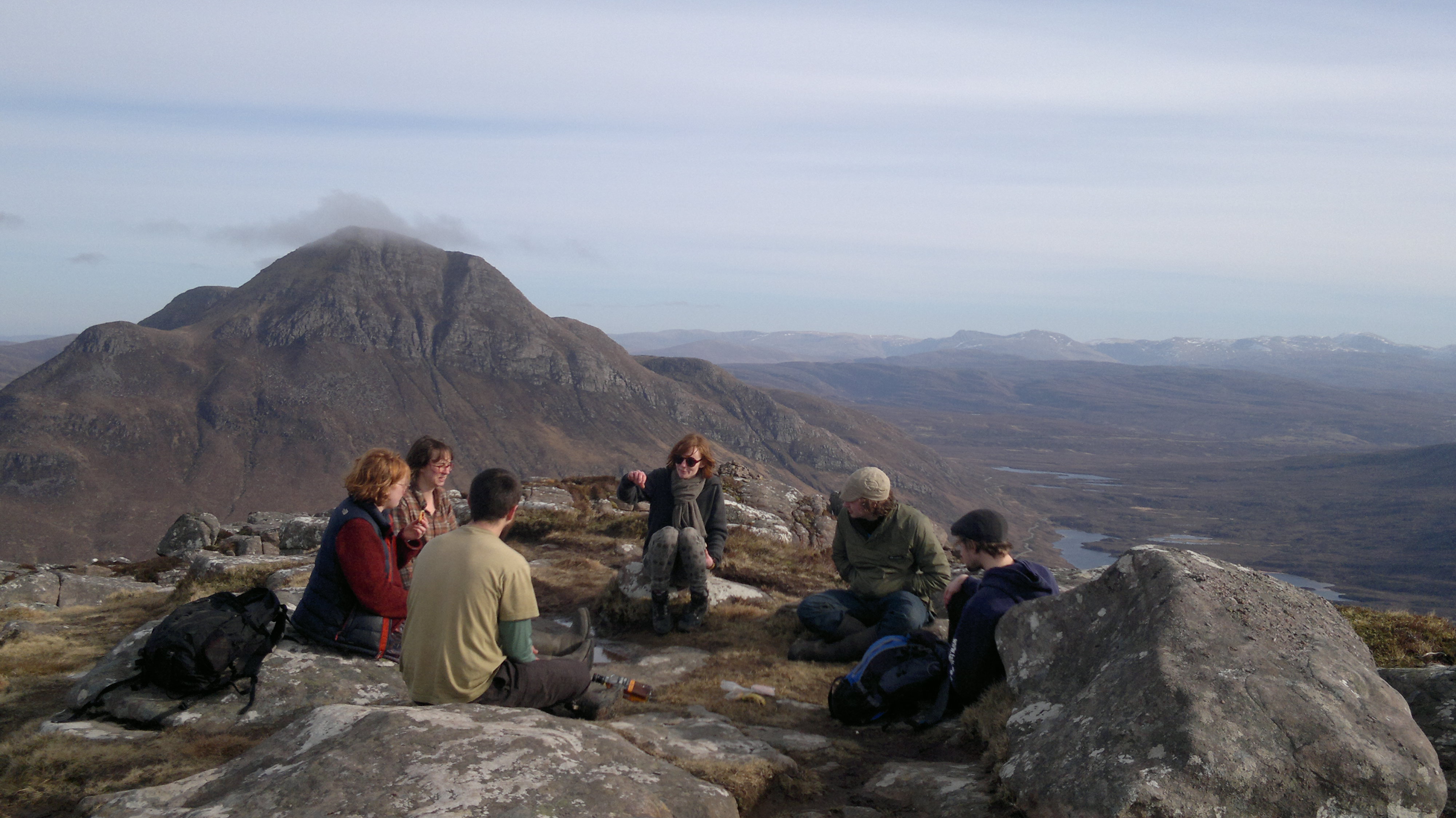
Wednesday 22nd April: This date found four delegates, myself, Maddy, Rob, and Alex, representing SCF Young Crofters at the Crofting Cross Party Group meeting in Holyrood. An event attended by MSP’s, and pretty much everyone with a vested interest in crofting! We presented an update on the Glencanisp YC20:20 Gathering, and concluded our findings from the event. The group were very welcoming of us and it was great to discuss the points we raised over the course of the meeting.

Friday 24th April: We held a meeting in Inverness, at the Velocity Café, mainly to relay back to those who couldn’t attend the results from the Cross Party Group meeting. We also held a vote to decide whether we should form our own official branch of the Scottish Crofting Federation. A 100% vote towards creating our own branch followed suit, and the SCF Young Crofters was officially born.
Young Crofters 20:20 Gathering 2015 (Pt.2)
Day 2: The next day saw a fresh set of workshops and talks. We kicked off with a talk by Ronnie Eunson, a crofter from Shetland specialising in breeding Shetland Cattle. This was a very engaging talk following Ronnie’s journey from keeping Texel’s and Shetland x Herefordshire cattle to only Shetland cattle and sheep – species ideally suited to the Shetland climate. The journey and research Ronnie underwent to get where he is today were incredible to hear about, and it was really great to meet him and hear more.
We then started our next lot of workshops. I signed up for one run by Becky Shaw, from Scottish Natural Heritage. Here, briefly interrupted by a dash outside to see the solar eclipse, we discussed how food production systems conflict with environmental systems. In our group of roughly 20 we had a good range of folk, including the crofting Elder Ena Macdonald, who is based on North Uist and has been crofting for over 70 years, she was also involved in the work done of the Western Isles as part of the Machair LIFE+ project
Becky surprised me when she asked me to talk a bit about crofting and how the RSPB feel about it and works with crofters – whilst I have been with the RSPB part-time for the last two years, it’s only been as a volunteer! However, I was able to describe the work being done up in Durness between crofters and the RSPB, for corncrakes and great-yellow bumble bees, and the idea of High-Nature Value farming, which was good! We then discussed ways that crofting land use and environmental land use work together, examples such as using seaweed as fertiliser (as is done in Durness and on the Uists) and crofters not using pesticides and weed killers such as Round-Up on their crofts came to light. We also discussed the idea that, by being less intensive, crofters almost act as stewards of their ground, and there is an inter-dependence between the crofter and the ground they look after.
We broke from this session, had a cup of tea, and headed straight into another – this time with a member of Scottish Government. This workshop was more focused on policy and funding, but I can’t tell you much more as my notes have gone AWOL.
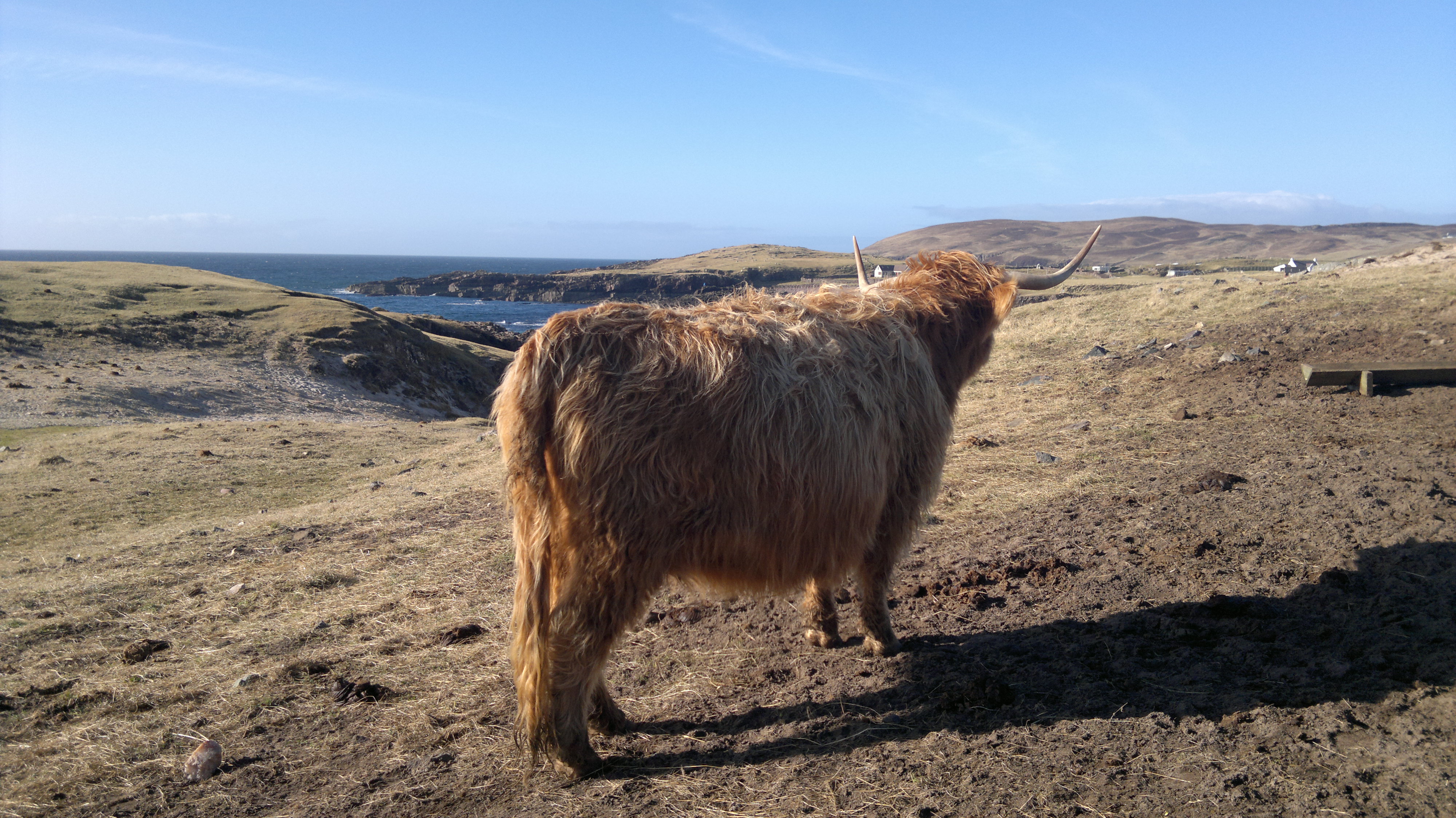
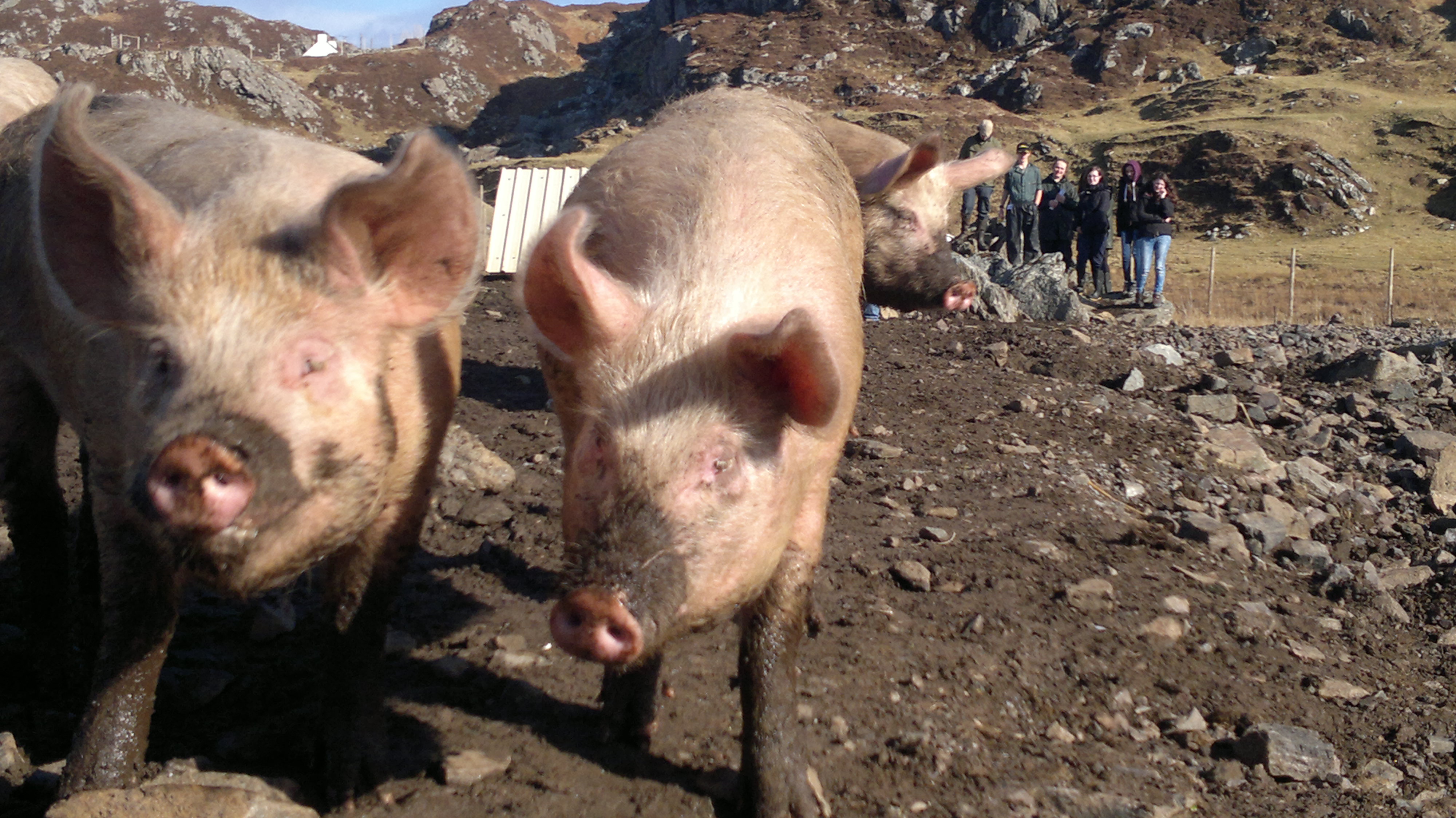
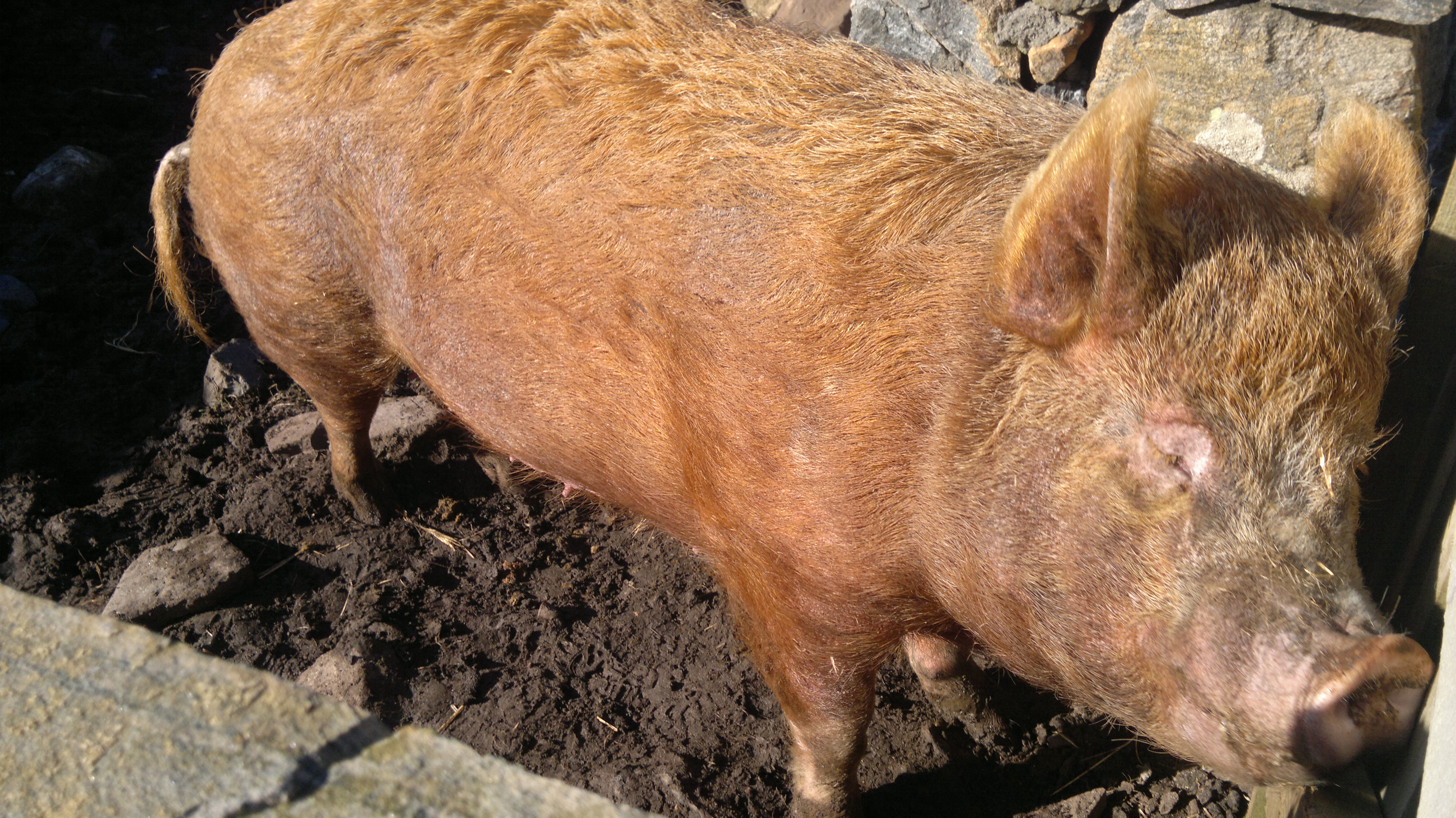
In the afternoon of the second day the SCF had organised croft visits for us, so off we went into the Assynt countryside. My group ended up in Clachtoll on Split Rock Croft where we were greeted by crofter Graham Acreman, who showed us around; first visiting the pigs – his litter of Large Whites who will be fattened, sent to Dingwall for slaughter, and sold to the local hotel in Kylesku; then going to see the Highland cattle, who were lovely; then we had a look round the croft itself, discussing the fact that as well as the croft Graham and his wife run a B&B, we discussed using the Common Grazings, and how few crofters make use of this asset, the problems crofters face, such as the weather; and finally finished our visit by going to see Mrs Bramble, an enormous Tamworth sow!
For tea on day two we were treated to a full on feast from the Highland Hog Roast company – absolutely lovely folks, a fantastic service, and above all amazing roast pig!! I also found out later that they themselves are crofters and this is how they have diversified – a reminder to think outside the box!

Young Crofters 20:20 Gathering 2015 (Pt.1)
Right, I should have got my act together literally months ago and written about this after it happened, however, hindsight is a wonderful thing and I’m writing about it now so we’re all good. I’ve split this summary into three separate posts.
Back in March I, along with about 90 other people, attended the Scottish Crofting Federations YC20:20 gathering. Held at Glencanisp Lodge, near Lochinver, Sutherland, the event brought together young crofters, aspiring crofters, crofting “Elders”, MSP’s, kids from Shetland and the Western Isles, members of the Scottish Crofting Federation and the Crofting Commission, and representatives from SNH, Nourish, Permaculture Scotland, Scottish Government and various others.
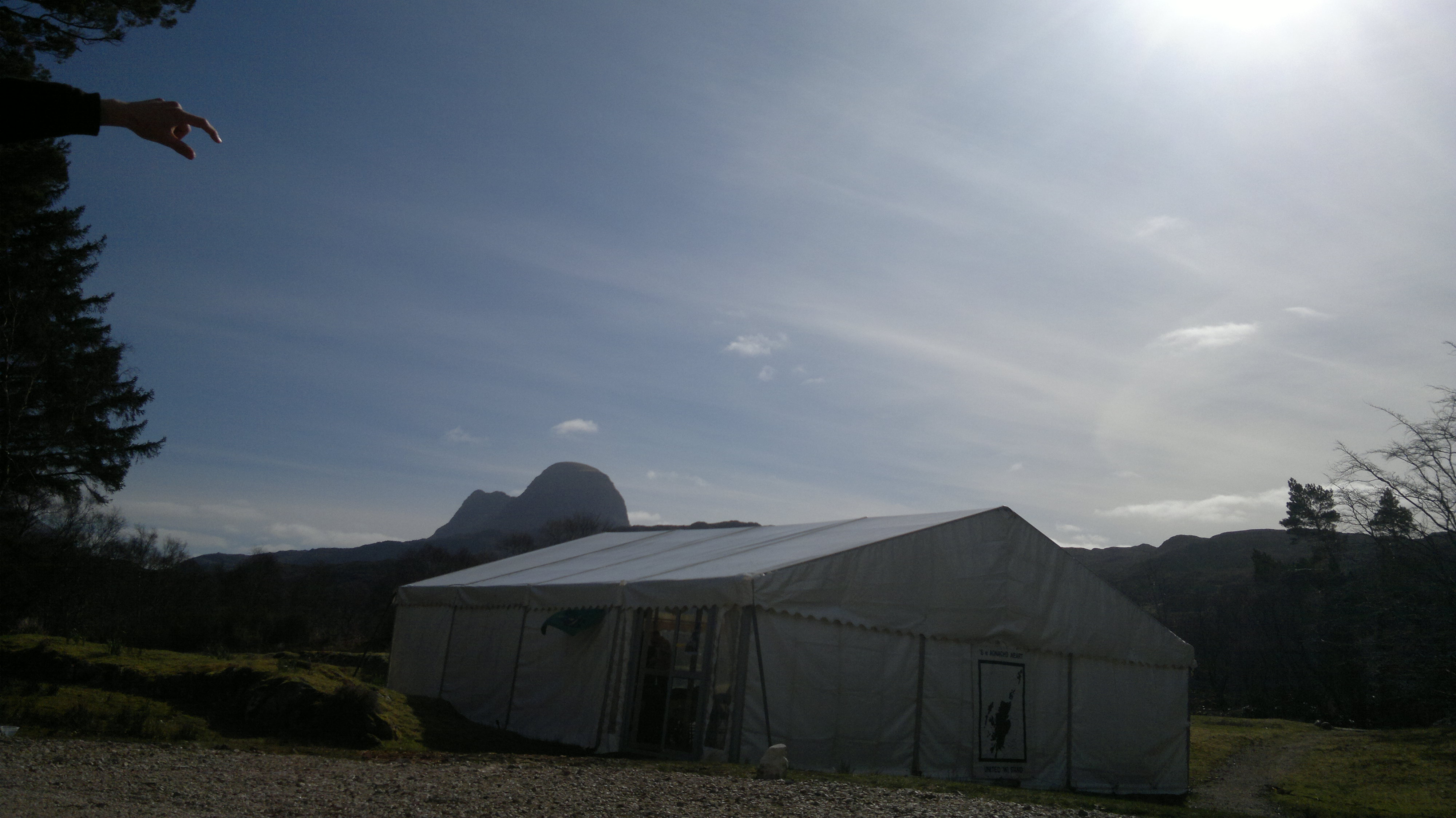
Day 1: I travelled across to the West Coast with two young crofters, Maddy and Rob, who have recently bought a croft just up the road from me, Maddy is a self-employed artist, you can see her work here. After dropping off our bags at Inchnadamph Lodge, where we would stay for the next few nights, we headed to Glencanisp Lodge to register and meet everyone.
After the initial registration, name badges, and cups of tea we dove straight in. We began by asking “What is the future we want for crofting?” and this very much remained the theme of the Gathering. Splitting up into groups for workshops we focused on questions such as this and the discussions were enlightening. The main conclusions to be drawn from this initial session were that crofting is still very much a part of Highland life, and that there is growing interest in it, from a range of age-groups.
However, the kids we spoke to told us that whilst they have an interest in crofting, they see themselves moving away from the Highlands for work and education but that they hoped they would be able to return later in life. This theme of having to move away for work, was a re-occurring theme throughout the conference, and I will return to it later. It was also interesting to see people’s motivations for wanting to get involved in crofting: from self-sufficiency, to inheritance, to heritage, to a simple love of working the land and start into farming, to conservation and ecology, to getting involved in local food production and being part of a community.
Some memorable quotes to come from this first day include:
- “How can you help the planet when the monetary and legal side of things hurts you”
- “Crofting is a way of life”
- “Tradition is important, but there is a need to allow for youth and innovation”
After the first session we came together in the marquee to present our initial discussions, then after lunch split up again for a second round of workshops.
This time beginning to look at how we can make steps forward in crofting. A big issue brought up at this point was access to land, and not just in the Highlands – again something I will come back to. Another was education, training and skills development, helping people who want to get into crofting but who may not have a background in it to develop the knowledge to allow them to succeed. The Scottish Crofting Federation already run courses all over the place, but we also discussed the possibility of crofting apprenticeships, mentoring and to my mind it could even tie into projects run by Imbewu Scotland. Shetland are apparently already ahead of the game here as schools there offer a crofting qualification.
Another issue that everyone felt was pressing was the policy and legislation surrounding crofting, it was fairly unanimous that folk felt the entire system needed simplifying! A final issue which was brought up in this second session, and in general throughout the event was a lack of infrastructure in the Highlands – regarding everything from mobile phone signal and broadband, to access to slaughterhouses; at present the nearest abattoir is in Dingwall, a long drive for both crofter and animals, and this issue is being lobbied separately, though it is in the benefit of crofters and small scale food producers to add their voice.
We concluded the first day with a movie night before heading back to Inchnadamph Lodge and an early-ish night, to be ready for Day 2…
A Start of the Year Update

I haven’t posted anything for ages (December, how embarrassing), so I thought I’d just give a wee update of what I’ve been up to.
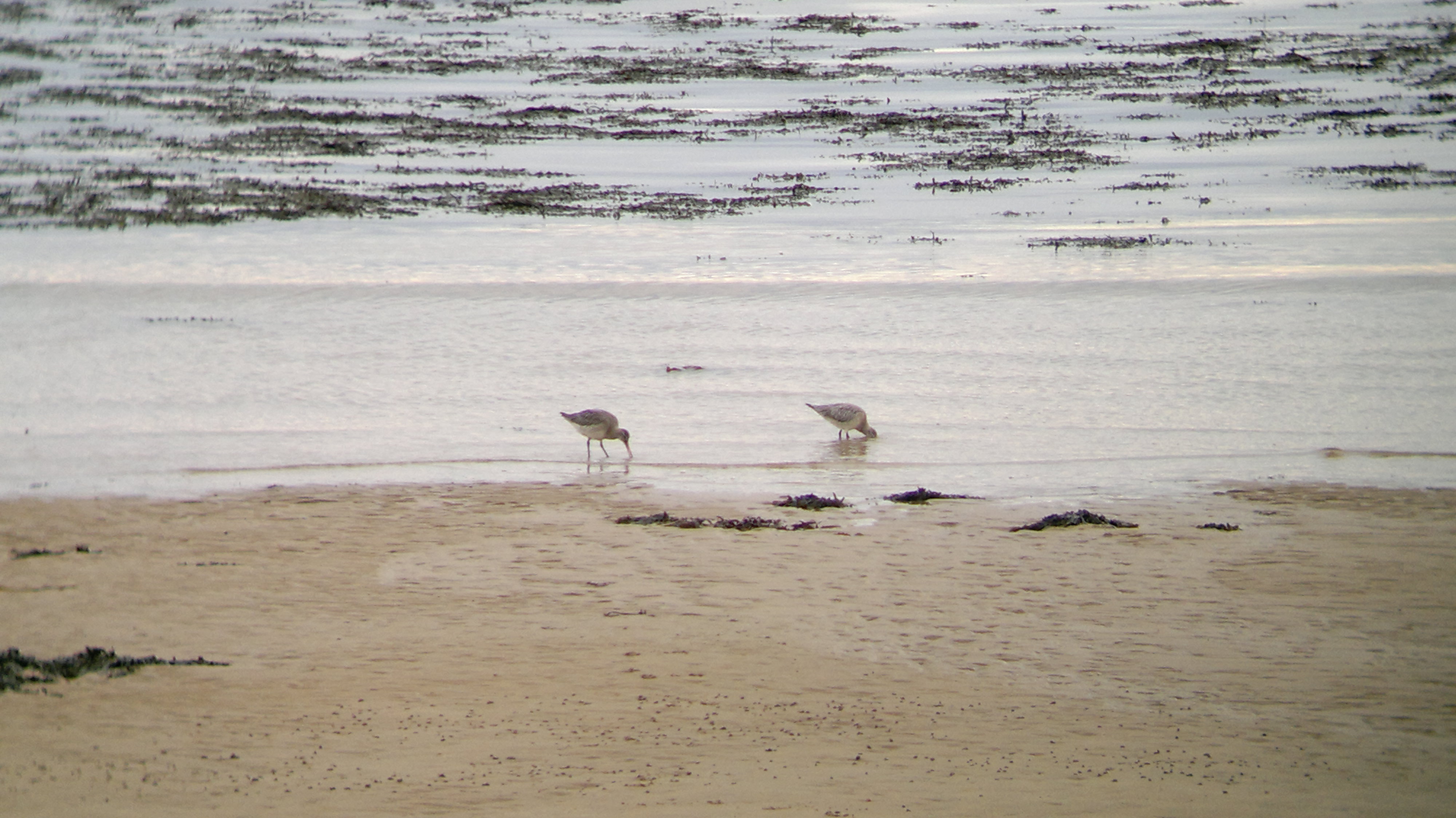
January: An interesting way to start the year, the perks included beating on my friends shoot and coming home with a brace of pheasants and a brace of ducks, having a sparrow hawk and a bullfinch in the garden and a couple of godwit just outside the office. The downside was definitely being involved in a car crash. Here’s a pic of the godwit.
February: February was a very slooow month. A lack of transport meant lots and lots of beach and forest walks with the pack, and many night time wanderings in the woods.
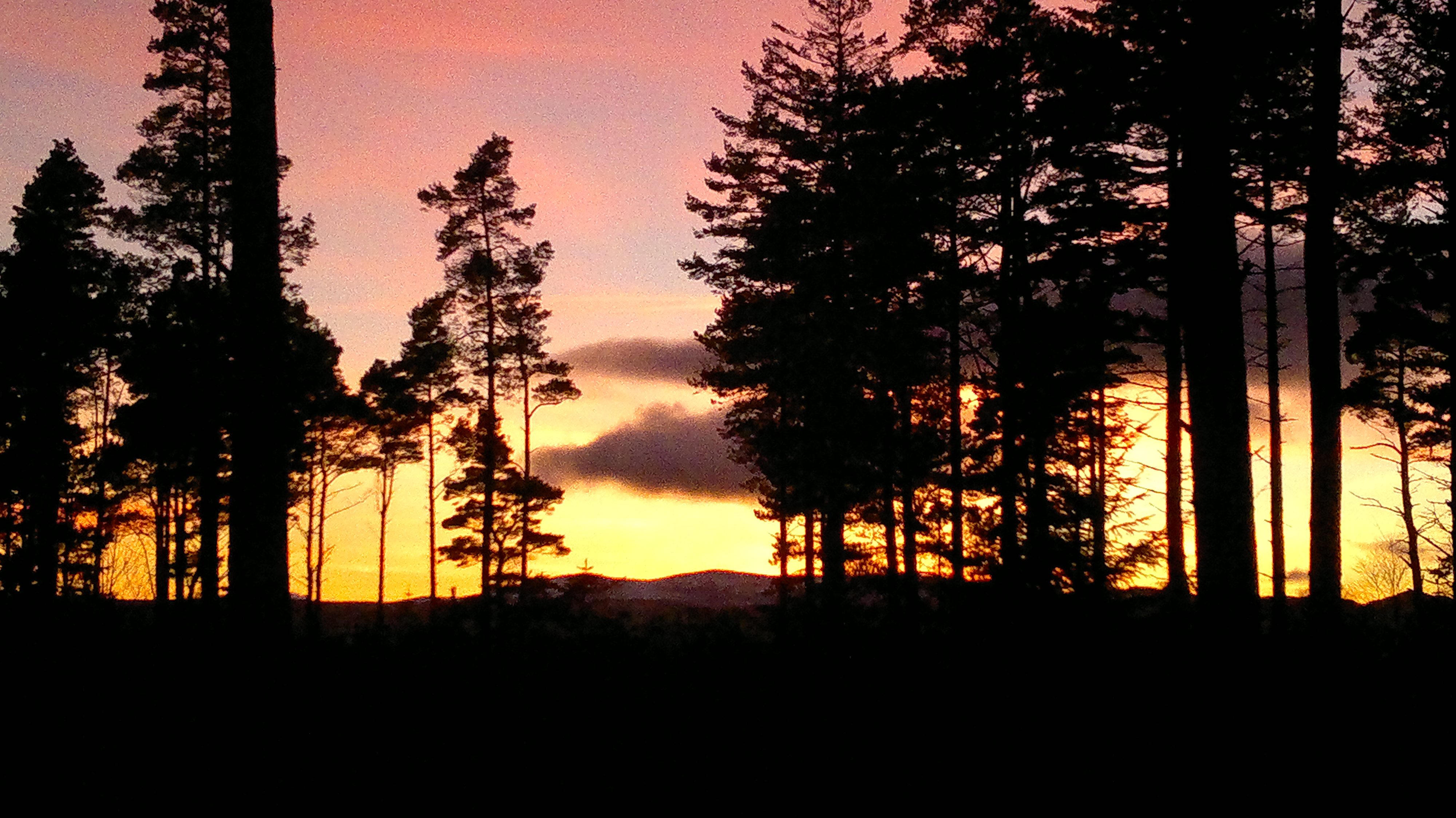
March: The big event in March was the gathering organised by the Scottish Crofting Federation, YC20:20 – I’ll do a separate post on this, as I have lots of pictures and quite a bit to write from the three days! In short it was a gathering at Glencanisp Lodge (near Lochinver in Assynt, Sutherland) of over 90 people, kids from local and island schools, crofters from all over the Highlands and islands, aspiring crofters, and folks from groups such as Nourish. It was a brilliant opportunity to meet many like-minded people.
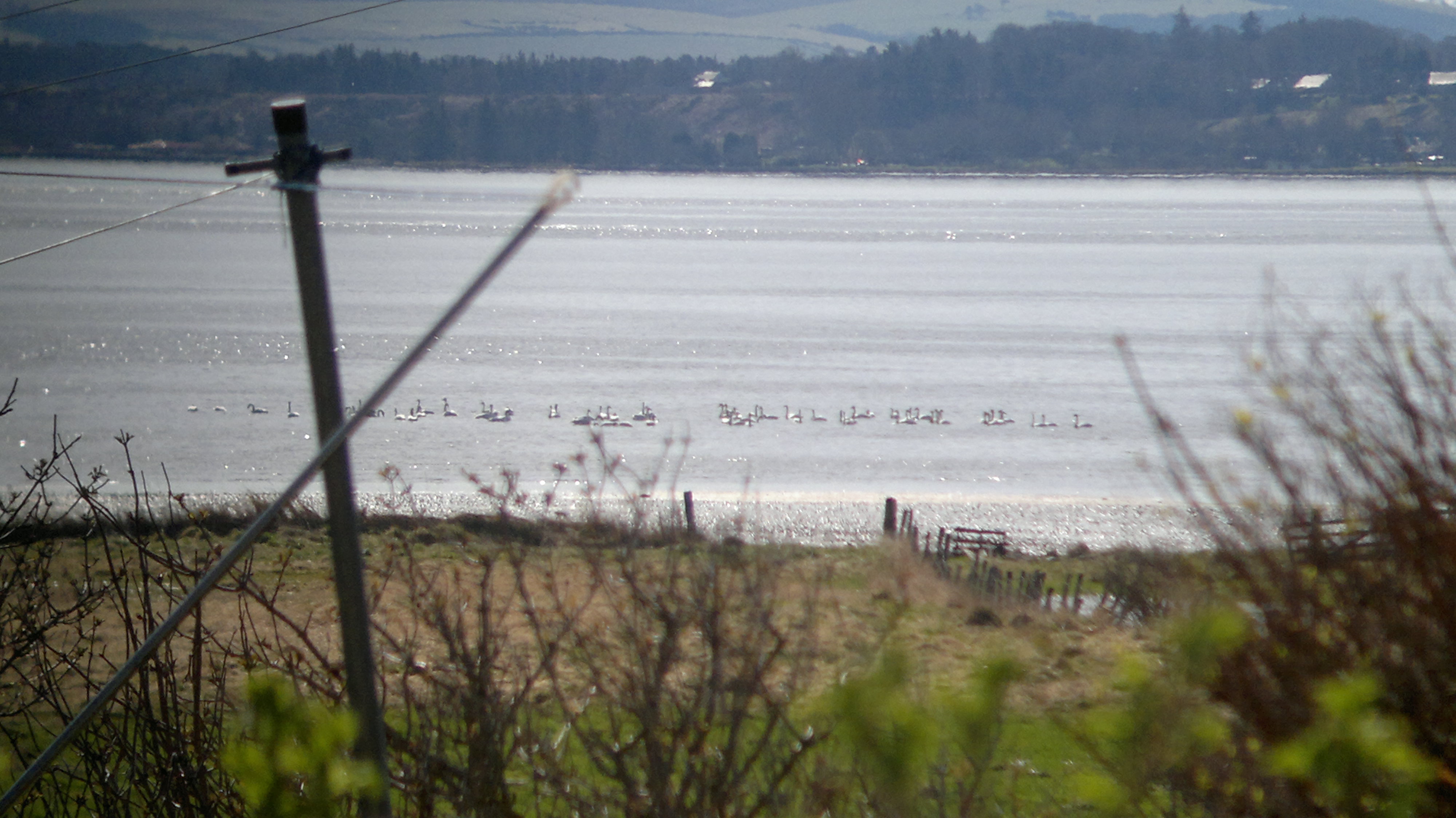
April: April took a wee while to get going, but things soon got underway. We had some days of absolutely cracking weather, which brought out all the bird life, and even resulted in me catching the sun a bit! The geese and swans were still mooching about, we had a family of some 60+ whooper swans on the estuary at the bottom of the garden.
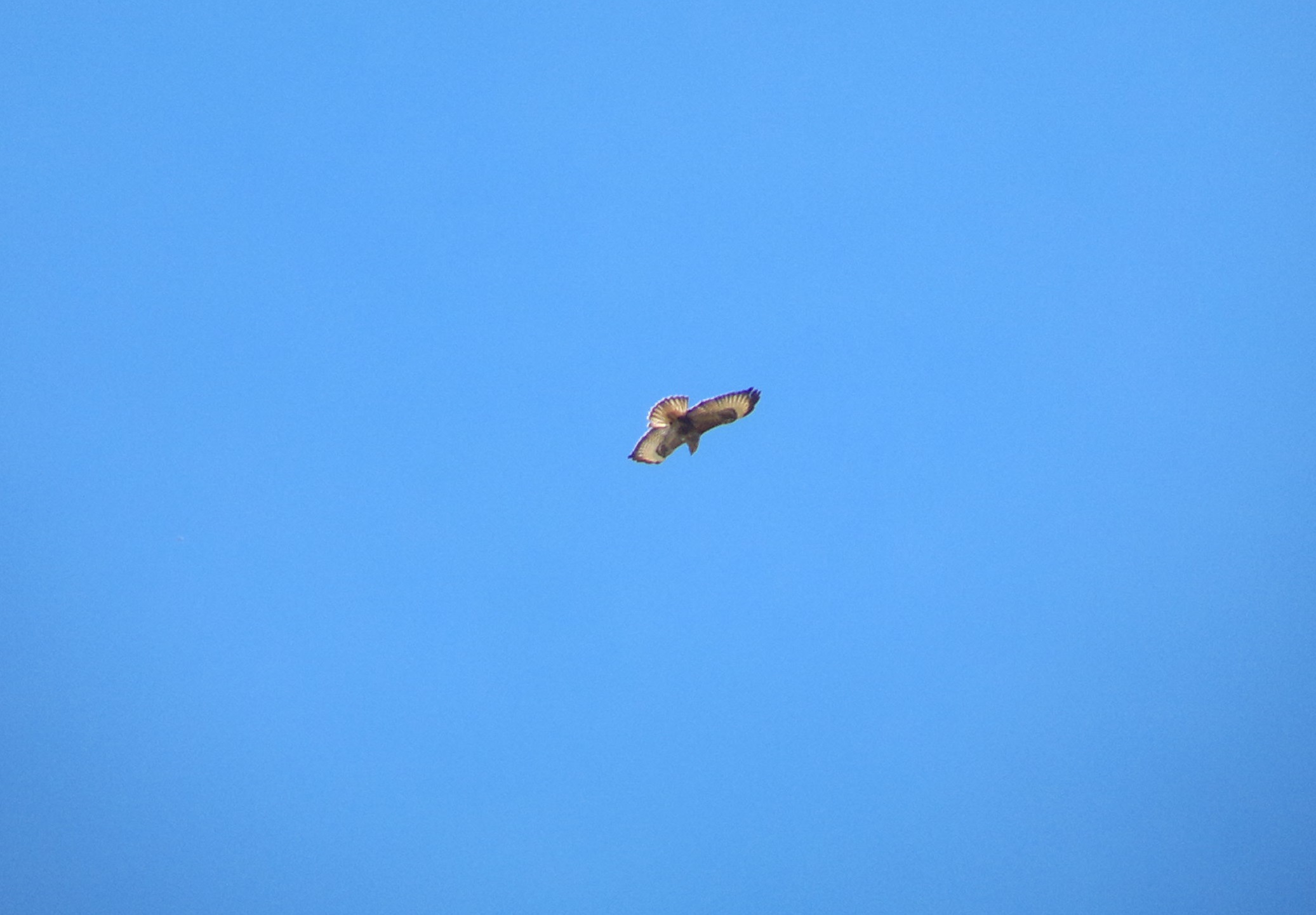
We also had some lovely displays from our resident pairs of buzzard, kestrel, and merlin, right over the house.
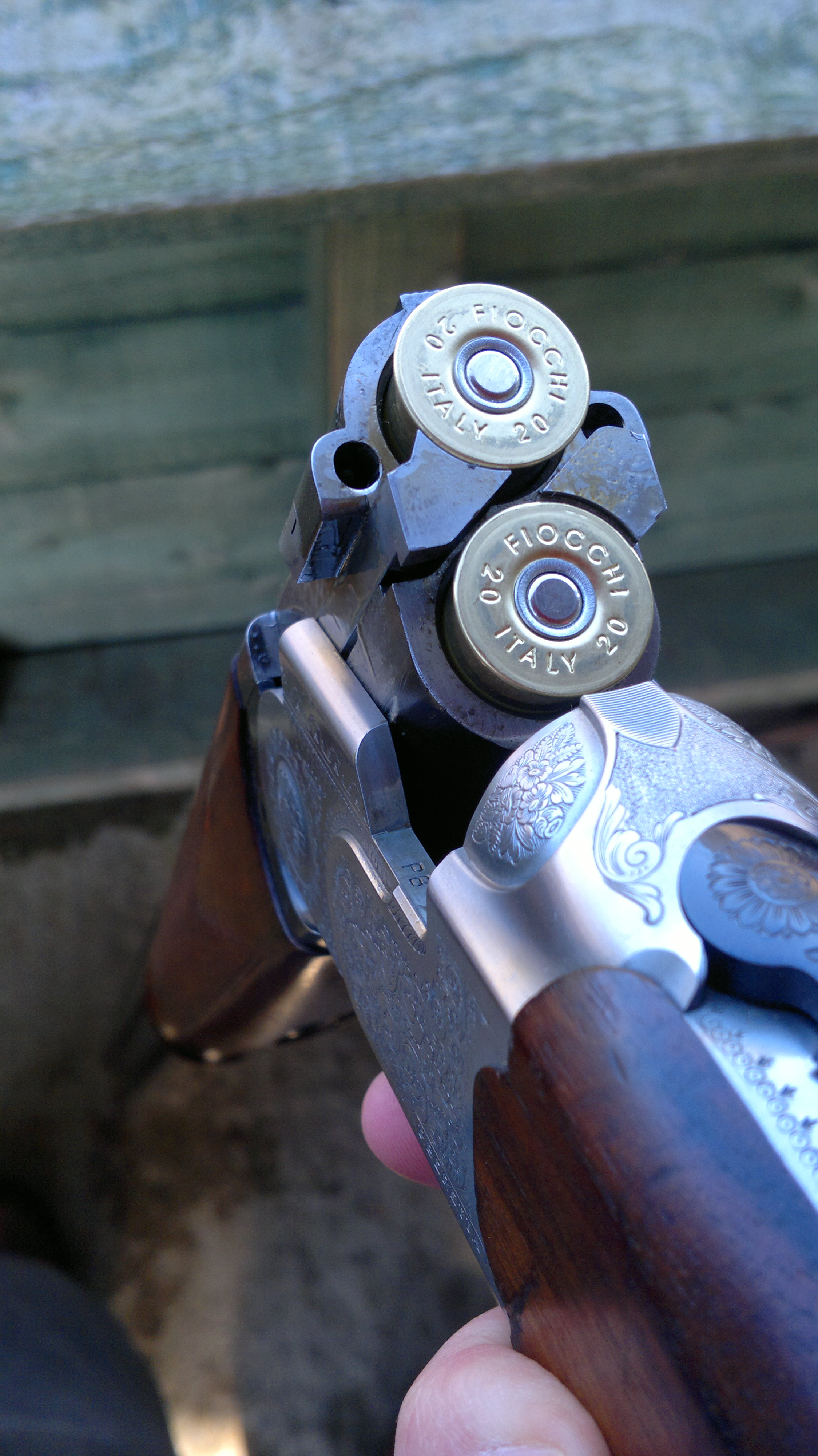
I managed to get up to the clay range a lot in April, there’s no finer way to spend a few hours! I’m lucky to get out with a good wee group of chaps most weekends.
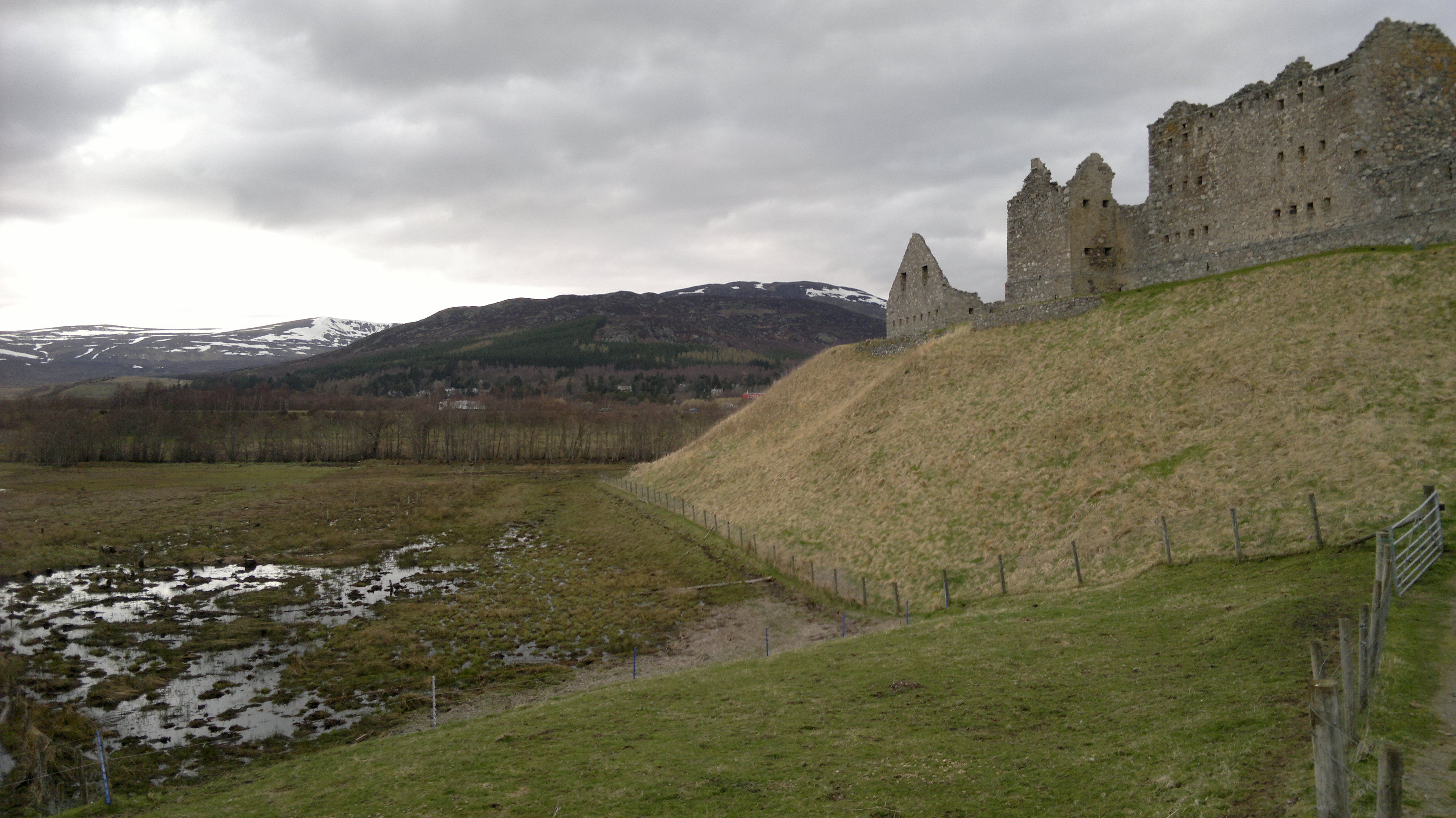
I got out to Ruthven Barracks to go and survey farmland waders. We had a great show from the snipe and lapwing, and I got allocated my sites to survey this season; one in Strathspey and one in Caithness.
Come the end of April I got out on several woodland grouse surveys – both capercaillie and black grouse. Some early, early mornings. I’ll do a separate post for those as I have some cracking pictures, though they honestly don’t do the experience justice! Mixed into this we had a freak snow fall…which was interesting.

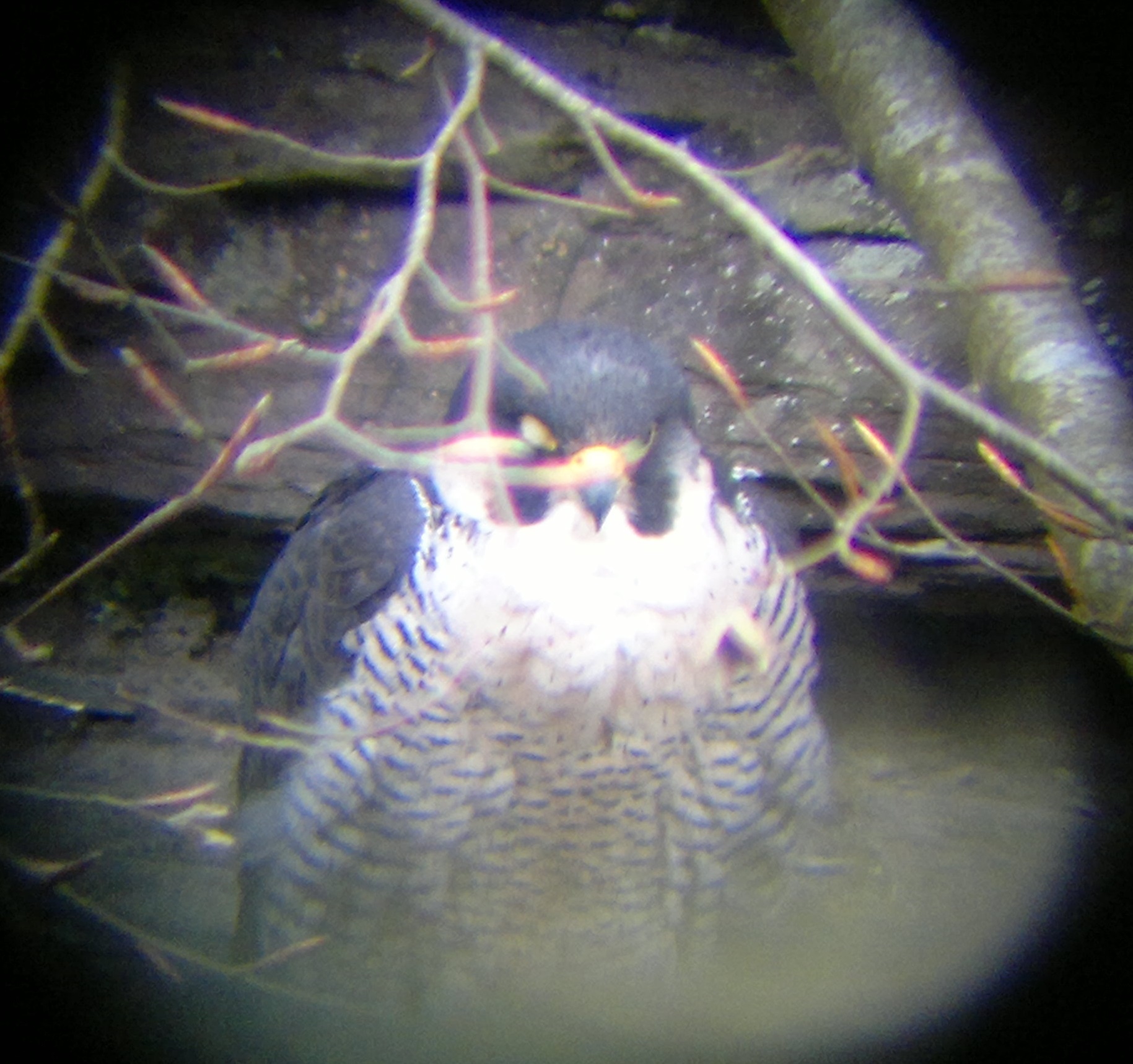
The month rounded off with a weekend trip down country to Midlothian to visit a colleague, to attend the Beltane Fire Festival in Edinburgh, and to visit the Falls of Clyde to see the peregrines. I surveyed for peregrines last year, but never saw any, so it was nice to see the birds so up close.

The World at Night with Clear Skies and No Light Pollution
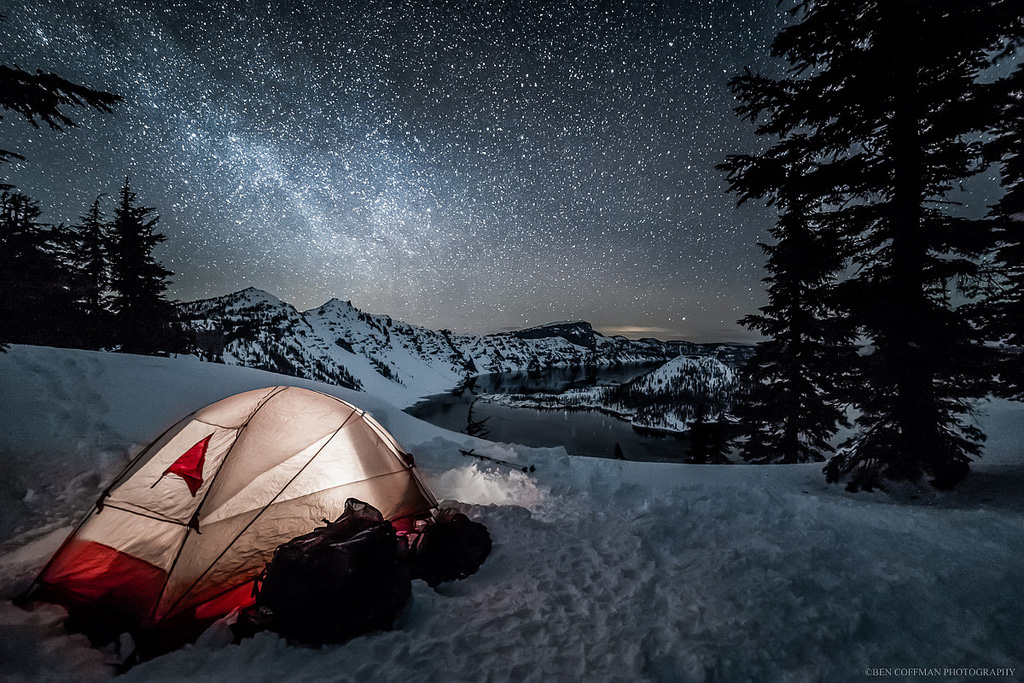
These are just incredible, beautiful, and awe-inspiring. Well worth a look!

Ben Coffman is a landscape photographer based out of Portland, Oregon, who specializes in night photography, in particular ‘landscape astrophotography’ featuring the Milky Way. Not only does this give Ben the opportunity to explore the great outdoors, but it lets us city dwellers gain a greater appreciation for the awe-inspiring night sky as well as the breathtaking landscapes of our planet.
The Sifter caught up with Ben and he was gracious enough to answer some questions and offer insight into his craft and passion for night photography. To see more from Ben be sure to check him out at the links below.
1. Crater Lake National Park, Oregon

2. False Dusk and Falls, Oregon Coast

View original post 1,310 more words
First Post and Discussions
I’ve started this blog to record discussions and debates I have with people over various issues, mainly those concerning the Scottish (and occasionally English) countryside. I have an interesting viewpoint to stand from – whilst I enjoy fieldsports and activities such as deer stalking, I am also a long-term volunteer with RSPB Scotland and the Scottish Wildlife Trust – inevitably I end up in a very grey zone and often times just plain confused!
What started this discussion was this statement made by a chap on Twitter – “Shooters calling themselves conservationists is just like Fred West calling himself a landscape gardener.” @YoloBirder. This was then shared and re-tweeted by a good number of individuals (showing he isn’t the only one to be thinking like that).
Now, I can appreciate that it is a generalisation. However, I must admit on a personal note it did sting somewhat – being into shooting and at the same time dedicating, literally, thousands of hours a conservation charity and hundreds to another. Now, I took to a popular social networking site to air my views, and was greeted by two statements, one from an artist and the other a conservation scientist.
Viewpoint 1: “Where are all the shooters to prove this wrong? If they are such good conservationists in this country where are all the Hen Harriers in England? All the hunters I admire are Canadian or American and are actively involved in conservation, only Brit I can think of is Ray Mears and I doubt he would defend driven grouse shooting or the kind of shooting that goes on in Malta (and I don’t see any shooting organisations in the UK condemning that). If the shooters in this country want to be considered conservationists I suggest they get on with proving it.
Comments like the one above should only incite them to do so more, if that is actually what they are. Therein is the problem, there are people who do want to harm and kill for fun, legal hunting can provide a handy cover for these unhealthy urges (otherwise illegal will do if they think they can avoid being caught). These people should never be confused with genuine hunters, they are psychopaths. Hunters should never tolerate them among their own, but generally they will defend them, making them at best misguided and at worst culpable.“
Viewpoint 2: “I do agree that we (in conservation) should be showing more support to those in the shooting community who are pro-conservation. It can’t be an easy stance to take in that kind of environment (I’ve known pro-conservation shooters to be mocked, ostracised, even threatened). Backup from somewhere would surely be appreciated. I too have been angered by seeing people in conservation indiscriminately bashing ‘all gamekeepers’ and so on, it’s often unhelpful when we should be trying to build bridges.
However (you knew there was going to be a ‘but’ in here somewhere right?) I also feel that it might not hurt this minority in the shooting community to grow some stones about it. We’re dealing with a situation of endemic criminality (the situation with hen harriers for instance is pretty sickening). If people are getting angry and speaking out about this then that should be encouraged, not attacked just in case we hurt someone’s feelings. Trying to artificially bolster the populations of a few species (mostly red grouse and pheasant – the latter a non-native, snake-killing pain in the arse) at the cost of all other species isn’t conservation and those that try to paint it as such should be treated with the contempt they deserve. We’ve left the fox in charge of the hen coop for on this one for far too long, and now the shooting lobby is upset that we don’t trust them? Even after all these years of widespread, relentless violation of the law they still demand that they be allowed to self-police? Really? Do they think we’re idiots? Or do they just regard us with such utter contempt that they don’t care what we little people think of them?
Please don’t take this as me having a go at yourself (I have several friends who shoot and practice conservation so, as they say, if the shoe fits wear it). However I find the wide-spread, often illegal and unpunished, persecution of our wildlife, and the resultant vandalism of our countryside to benefit a small minority of the population deeply offensive. Every time I see that another bird of prey has been found poisoned, another harrier nest has been stamped on, another person who reported these crimes has been threatened with violence, I am sickened and enraged – and I take it personally. These are crimes against all of us and the best the shooting lobby can come up with by way of response is “Oh its only a small minority that do these crimes” (if that’s true they must be a criminal mastermind because we certainly seem to be missing a hell of a lot of harriers). I’m over the moon that, at last, there seems to be a momentum against this shit and that the public voice of conservation has gone from mithering in the background to shouting in anger.
Rather than throwing up their hands and saying “I’m so offended, it’s terribly unfair, why are you always picking on us, boo-hoo” maybe the shooting lobby should take a look at itself and start treating those who illegally persecute wildlife like the criminals they are. Too much time and money is spent defending those who break the law and thumb their noses at the majority of the people in this country, and all the while charitable organisations are expected to pick up the pieces and repair the damage whilst these bastards carry on unrepentant. Is it so much to ask that these ‘shooting good guys’ make some effort to demonstrate their conservation credentials? Or should we not just in case we hurt their feelings?
It’s been proposed that estates which fail to maintain the quality of any SSSIs on their land should lose their licences to shoot (specifically in the case of driven-grouse shooting) until such time as those SSSIs are restored to – at least – the state they were in when they were designated. Furthermore the licences should be issued in the Spanish style, to the estate itself rather than the owner, to avoid any shenanigans where control is passed from one family member to another every time punishment for their misdeeds starts to loom. Frankly I think this is a great idea. Not only would it hopefully bring the rampant vandalism of parts of our uplands under some kind of control but also it would give all these members of the shooting lobby who claim to be keen conservationists a chance to get out there and demonstrate their supposed skills. In the meantime the suggestion that the shooting lobby acts as a force for good on wildlife matters remains a joke, and not even a very funny one.”
Now, firstly, I’m bloody impressed if you’ve reached this stage! Personally, I do think it is time that the shooting industry did start to make those who commit wildlife crimes seriously uncomfortable, rather than defending them. But regardless of that, I think it’s time to open the floor to comments and thoughts from anyone else now….
 Wayfaring and Wandering