Wayfaring and Wandering
Deer, Land, Training and Travel
Electric Fencing: Innovations in Sustainable Croft Management
I think it’s time for a very long over-due blog update…!
Since I last wrote on here, we’ve had a global pandemic, several wars, Brexit really kicked in, Notre Dam cathedral burnt down, we’ve had elections galore, and the death of a monarch. It’s been nothing if not eventful on the global stage.
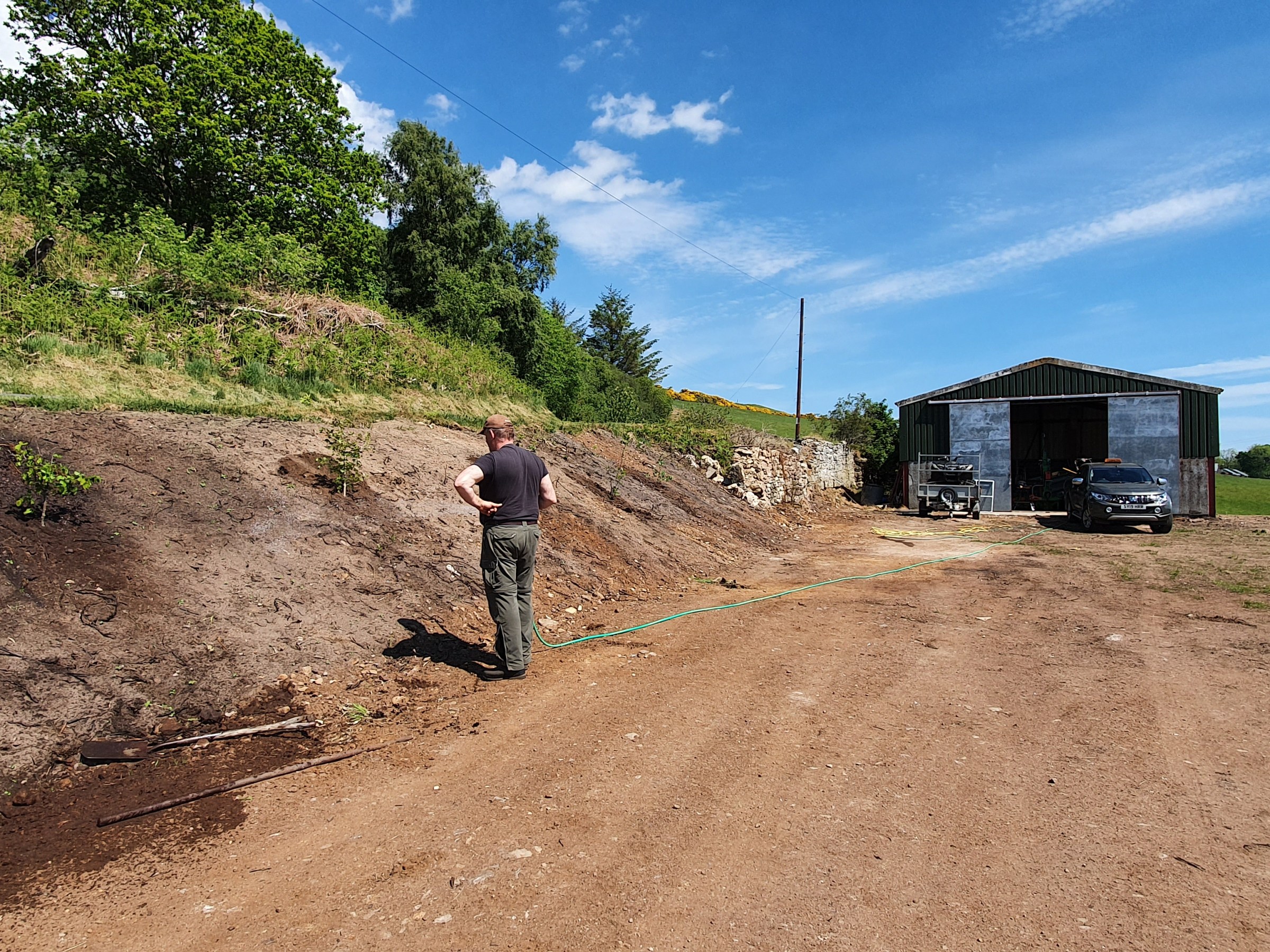
Closer to home there have been big changes in my little corner of the world. I moved to my partners croft, my dog had a litter of puppies, I had a kid, got a new job – which has meant a lot less deerstalking and a lot more screentime. We got some sheep, goats, chickens and quail, we built a Polycrub and have spent weeks and weeks (and weeks and weeks and weeks) tidying up the mess, rubbish and scrap left by the previous owners and tenants on the croft we now live on.
I like to think we’re now getting somewhere with croft-life, but it’s still a work-in-progress. It truly is a lifestyle choice and absorbs every spare penny, but when things are going well and you’re able to put meat, fruit, vegetables and eggs on the table from your own back yard – it’s pretty satisfying and you forget all the struggles, shearing sheep in the midges and keeping everyone fed in the long, cold, dark winters!

Big Projects
One of the biggest tasks we’ve undertaken has been to re-fence the property.
Historic fences followed the lines of the old croft boundaries. Our holding is made up of what was originally several smaller holdings which have been amalgamated over time, as agriculture has changed, and people have had to upscale in order to make a profit.
These old fences followed or were incorporated into even older fence lines and underneath these we unearthed dry-stone dykes, which had vegetated over until they were just interesting or inconvenient (depending on the task at hand) lumps and bumps in the fields.
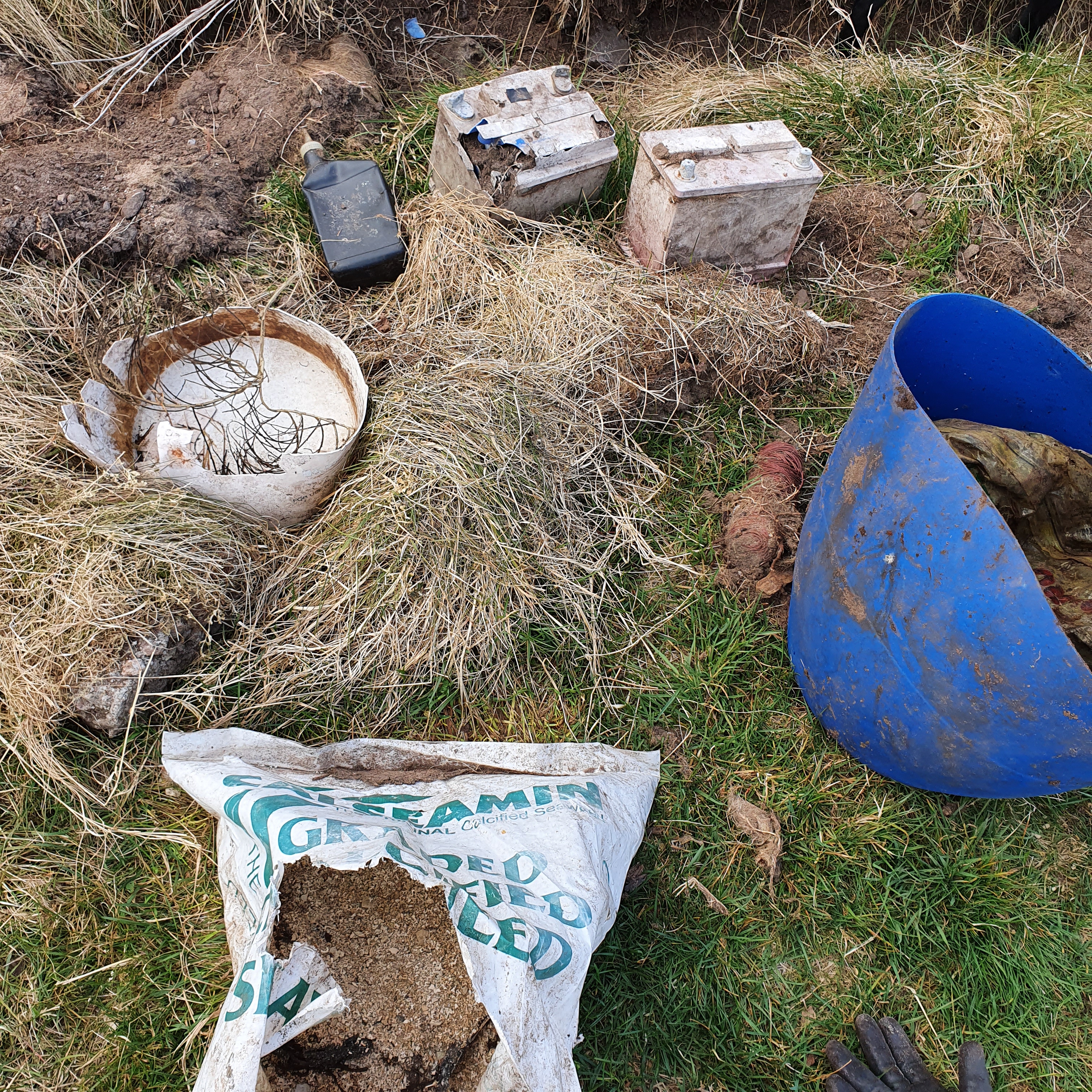
It’s been the work of several summers to remove thousands of fencing staples and coil old high-tensile wire, remove old and rotten fence posts and fencing strainers and to generally clear the ground ready for a fresh approach.
We’ve opted to change the way the croft is laid out, instead of having long, thin fields, we are instead subdividing the land by habitat type. Boggy peatland at the bottom of the ground, to be used during drier summer months; a grass pasture in the middle, which we’ll probably lamb in and will eventually use to grow our own hay; and a woodland zone, where I would like to allow stock to graze in future, but for now we’re on a mission to subdue the rampant bracken in this area.
Buzzing to Get Going
Alongside this change in fence lines, we’ve taken a different approach to fencing materials. We decided after a lot of thought to go for an all-electric system.
With kids and dogs around, I was keen to steer clear of barbed wire and I’ve had to dispatch more than my share of deer who’ve hung themselves up in fence wires topping a sheep netting fence, so again I was keen to avoid this too.
Given that feral pigs/wild boar are beginning to be seen further and further afield, we looked about at available options and the only thing that seems to work to keep them at bay is electric, so that’s what we’ve gone for.
Whilst we had no fixed fences in place, our first sheep (a group of wethers from Ardoch Hebrideans) arrived. However, I’m happy to report that the Gallagher SmartFence system kept everyone in place and was a great investment, continuing to work well even when the ewes arrived.
It’s a handy system which allows you to spool out 100m of four separate lines of electric wire and to wind them all back in simultaneously as well.
As we currently only have a small flock of sheep I can’t justify having a sheep dog, so the SmartFence also gets used as a handy way to move sheep about to where I want them in order to dose, shear or generally check them over.
This last summer we were finally able to get the permanent fence in the ground.
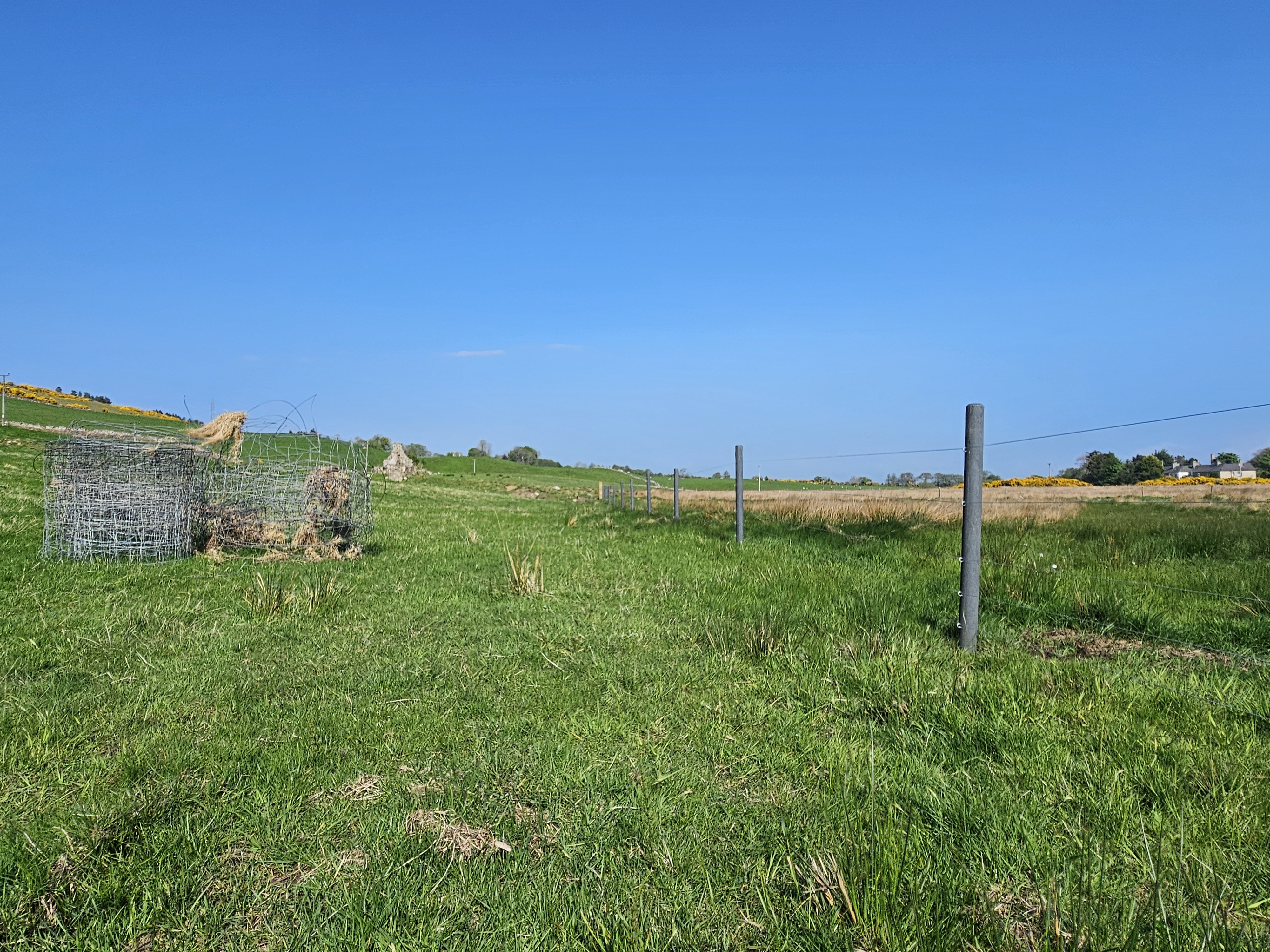
As I’ve said, we’ve opted for a slightly unconventional solution going all electric, but we’ve also chosen to use recycled plastic posts. These are more pricey than traditional wooden posts, but they have the added advantage that they will never rot, and so don’t need to be replaced further down the line and they’re a really smart way to recycle farm plastic and black plastic wrap. If you’re interested, go check out LL Plastic, based near Edinburgh – they’re a really helpful wee company I can’t recommend them enough.
What About Other Livestock?
The sheep have shown themselves to be pretty respectful of the electric fence, both temporary and permanent. However, we had some other residents who definitely tested fence capability to the max. At this point, you just know I’m going to say goats.

Famously difficult to keep in or keep out, they are a handy way to test if your fencing system is functional as they’ll suss out any weakness in record time. They’re really quite impressive animals in this sense!
Unfortunately, our wee flock began to really struggle with their foot health last winter and despite our best efforts we just couldn’t get them clear, so all bar one of them has had to head down the road. The remaining wether (who was meant to be destined for the freezer) has taken up his mantle of leader of the sheep and they seem to get along pretty well, all things considered.
The fence has also proved it’s worth for other stock – but rather than keeping them in, it’s worked to keep predators out. We live in an area where, these days, there is minimal predation control carried out with regards to foxes, and a neighbour of ours lost his whole coop of hens to a pine marten last year. It’s been interesting to see the number of ground nesting birds using the croft this year, and I wonder if, again, that’s because foxes and badgers, etc. are deterred by the electric and have been opting instead to find easier, less shocking, meals elsewhere.
An Honest Product Review
I thought I’d conclude this blog post with a product review of the electric netting I’ve been using in conjunction with our main electric fence system.

I had previously bought a 50m roll of the double-pin Gallagher sheep net fence from Electric Fence Online, for the goats, rather than the sheep, and it’s worked really well to prevent them from pushing their luck and trying to get into the vegetable garden. They don’t really test the mains electric fence, but a Polycrub and veg garden full of greenery and vegetables is just a bit too tempting and I’ve learned the hard way that goats require a ‘Belt and Braces’ arrangement.
I was then asked by the company if I would like to trial their electrified netting and review the Gallagher 50m poultry netting for our chooks, and I was more than happy to give it a go in a real world setting.
I have to say I’ve been really pleased with it…once I sussed out the best way to use it and get it set up!
I’ll start off by saying you ideally need a good amount of space to get it rolled out properly, otherwise, especially with the double pins, you get into an infuriating tangle, very quickly. I found the best option for initial set-up was to unroll it all roughly where I wanted it set up, then begin to pin it out and finally tension it once I was happy with the alignment.
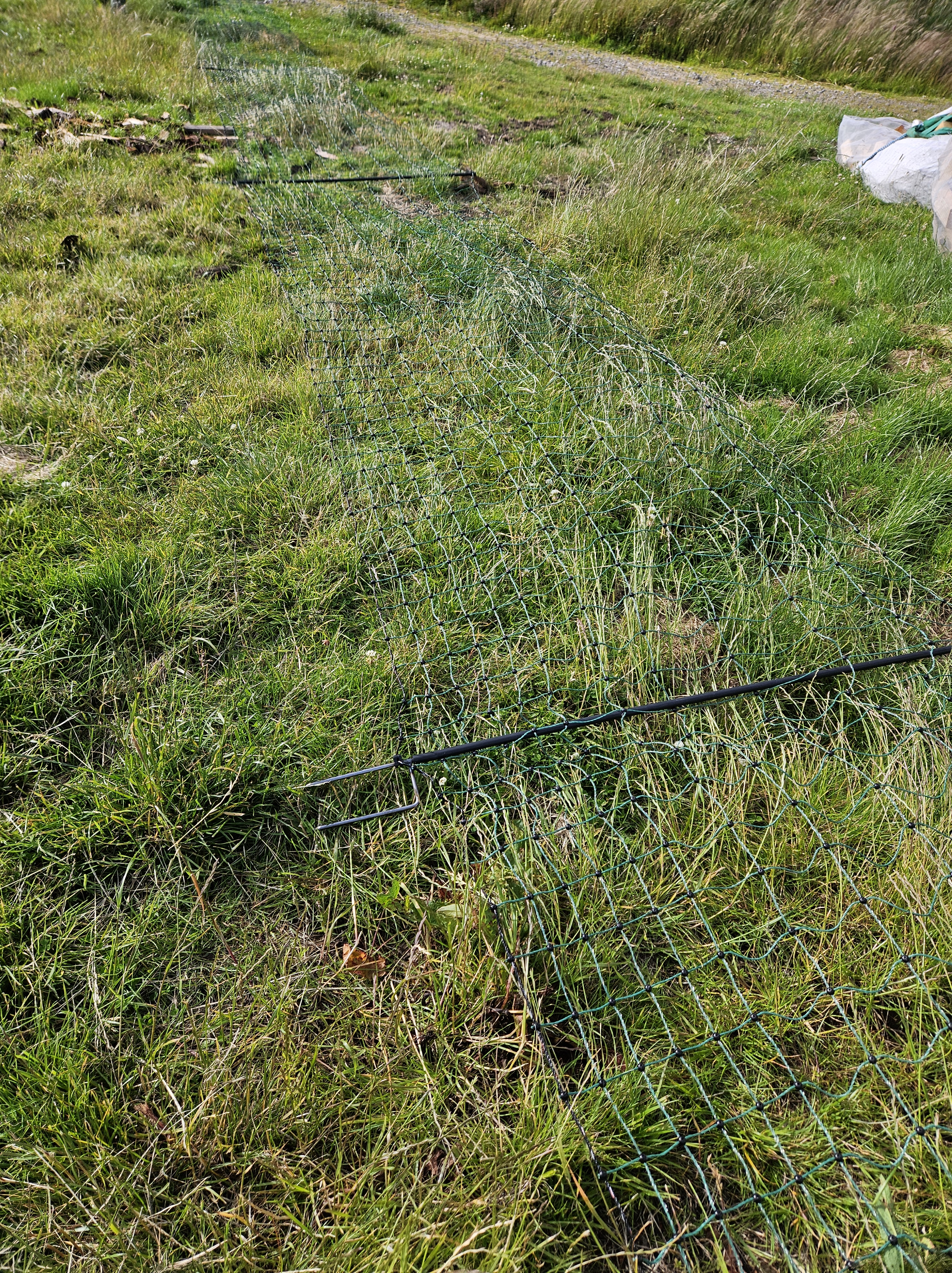
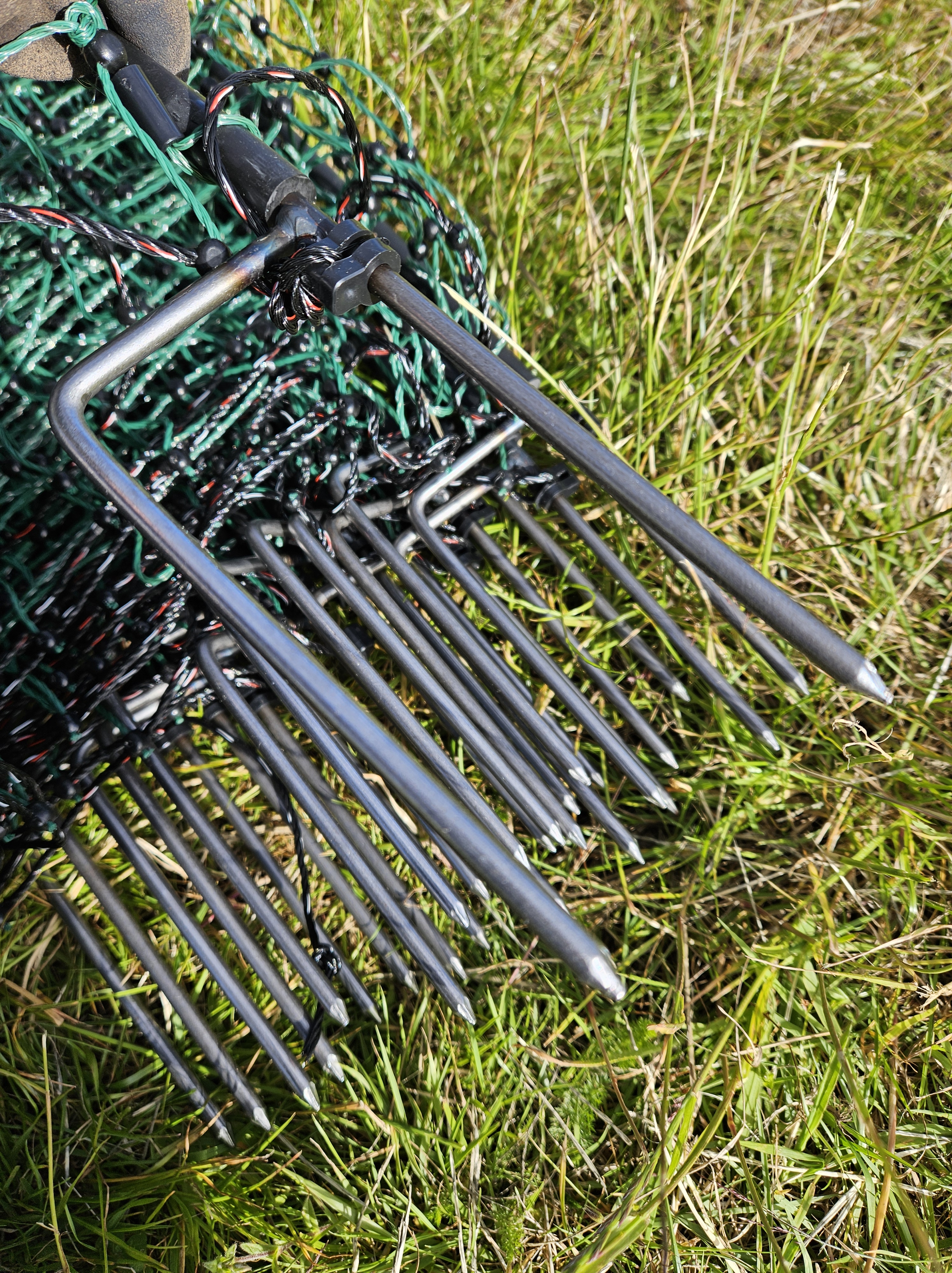
The chicken fencing, unlike the sheep/goat fencing, also comes with a pile of ground pins, so you can hold the base of the fence tight to the ground. The bottom six horizontal wires of the net get closer together towards the ground, reducing space for predators to squeeze through, bearing in mind it will be shocking them as they’re trying to get in, so it’s quite a good deterrent.
The gaps in the net are definitely too small for a pine marten to get through, and I think even a stoat would get a zap if it tried to get in. At 112cm it’s quite a leap for any animal to jump into the enclosure and it’s far too wobbly to them to climb up, again whilst being shocked. The height also seems to be enough to dissuade the chickens from being bothered about flying out.
I think, if you can, you’re best to strim or cut any high grass or rank vegetation from your proposed fence line before you get set up. In the worst-case scenario, you can just trample the grass, and the fence seems to burn off any vegetation it rests on, but the downside of this approach is a loss of voltage and decreased efficacy, so you’re best to clear it in advance, if you can.
If you’re moving the fence to a new location, there’s a bit of an art to pulling out the posts and bundling them together, whilst keeping the netting out of the way. It’s a bit of an artform and will undoubtably provide plenty of entertainment for your neighbours until you get a system organised that works for you. It’s a definite downside of using this set-up but, seeing as I’m not moving the chickens every other day or even every other week, it’s something you can plan for and give yourself plenty of time to do – and for your own sake, DO NOT try and get it organised when the midgies are out, you’re asking for a disaster and tangle that would make the Gordian Knot look like child splay.
The netting has had a good weather testing over the last few months, we’ve had some pretty strong late summer/early autumn gales, and it has quite capably stood up to them. I think the double-pin system is partly responsible for this success, it just seems to add grip and stability that I haven’t seen with other conventional single-pin fencing. It will be interesting to see how it does in the winter weather, but honestly, I think it will be absolutely fine.
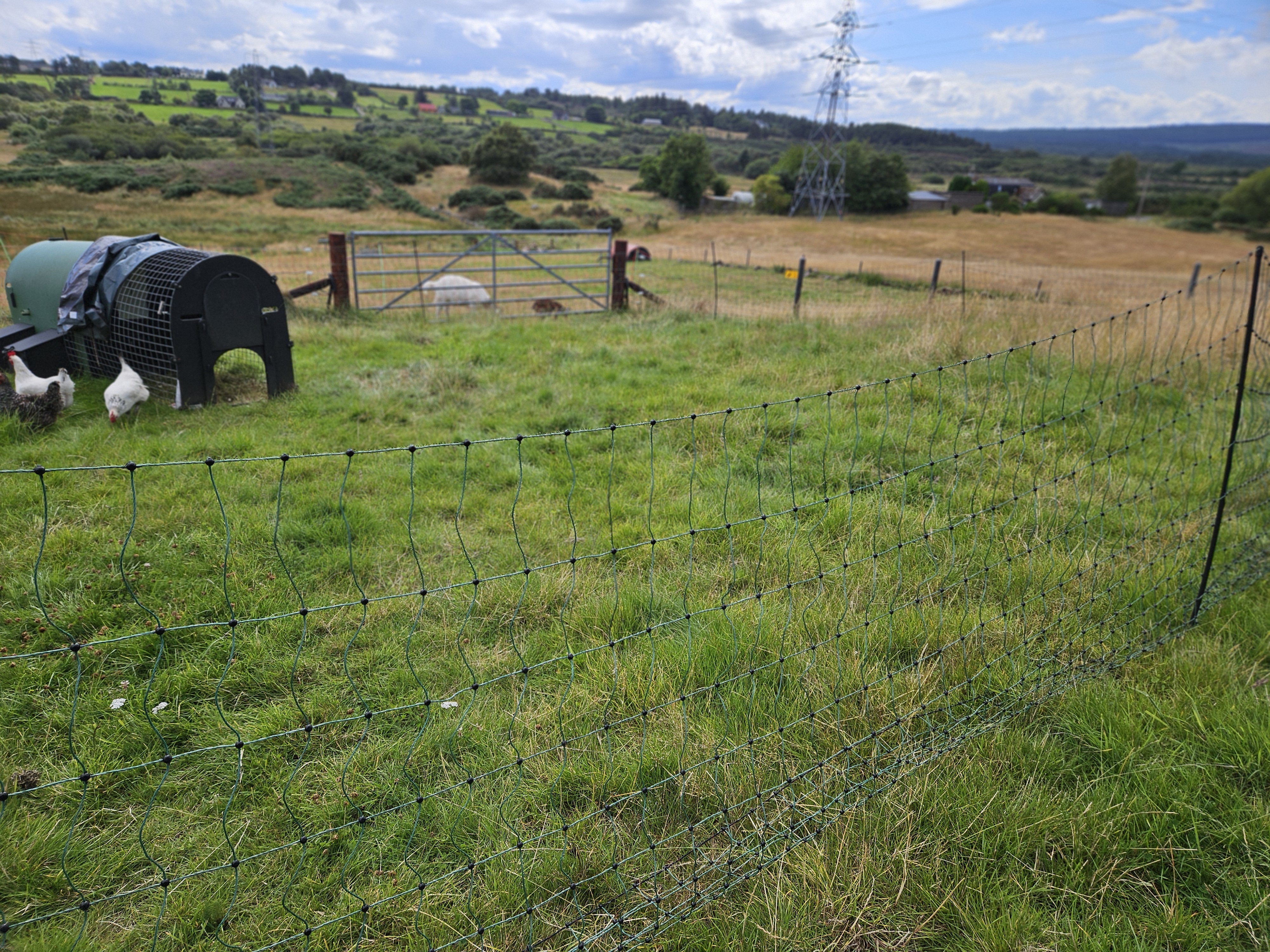
Overall, I’m very happy with this fence. The build quality, like most Gallagher products, is great, and the design is well thought out. I know I’ve critiqued the ease with which you can get it set-up and moved, but realistically, I can single-handedly get the whole 50m enclosure shifted and set up somewhere new in about half an hour.
If nothing else, it’s given me peace of mind that my girls have an extra layer of security, especially if I have to be away from home and the croft for any reason, and that alone is worth its weight in gold.
See You Soon
We have a few interesting and exciting projects coming up this winter – think hedges and fruit trees – so I’ll endeavour to keep this updated a bit more regularly from now on.
 Wayfaring and Wandering